
Blepharoplasty, also called eyelid surgery or an eyelid lift, is a customized procedure for loose upper eyelid skin, under-eye bags, puffiness, and a heavy appearance that can make you look tired even when you feel rested. It may be performed on the upper eyelids, lower eyelids, or both. When excess upper eyelid skin blocks peripheral vision, blepharoplasty may also serve a functional purpose.
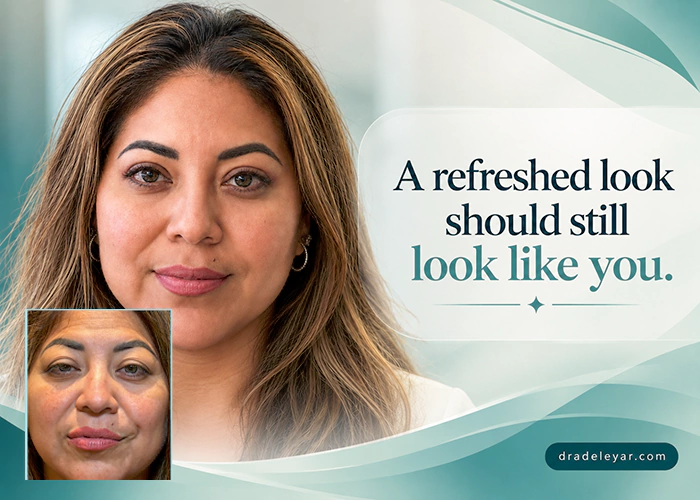
Modern blepharoplasty should not create a tight, hollow, or unfamiliar appearance. Its goal is to preserve your identity while restoring a smoother, more rested look through careful evaluation of the eyelids, brows, tear film, fat, skin, and overall facial anatomy.
If heavy eyelids or under-eye bags make you look more tired than you feel, a consultation with Dr. Adeleh Yarmohammadi can help determine whether blepharoplasty is appropriate for your anatomy and goals.
What Is Blepharoplasty?
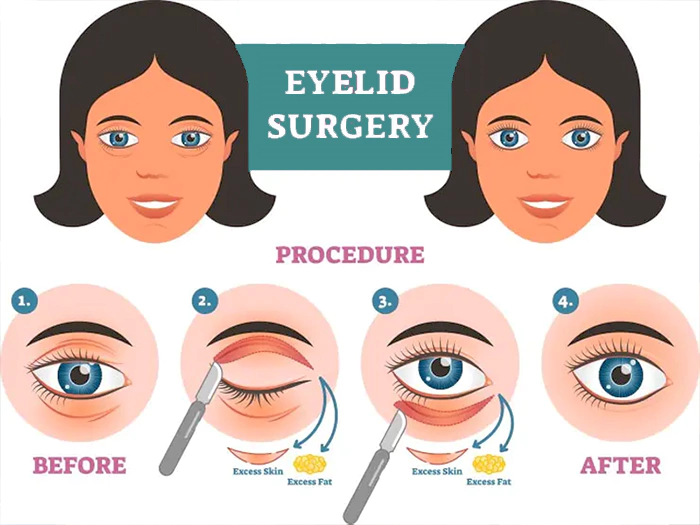
Blepharoplasty is a surgical procedure designed to improve eyelid shape, contour, and, in some cases, function. Depending on the patient’s concerns, the procedure may involve removing a conservative amount of excess skin, repositioning or preserving fat, refining the eyelid crease, or improving lower eyelid support.
Upper blepharoplasty treats hooded eyelids, loose skin, and heaviness that can make the eyes appear smaller or interfere with vision. Lower blepharoplasty focuses on under-eye bags, puffiness, skin laxity, and loss of a smooth transition between the lower eyelid and cheek.
Blepharoplasty does not correct every concern around the eyes. Pigmented dark circles, crow’s feet, a low brow, true ptosis, or cheek volume loss may require another treatment or a combined approach.
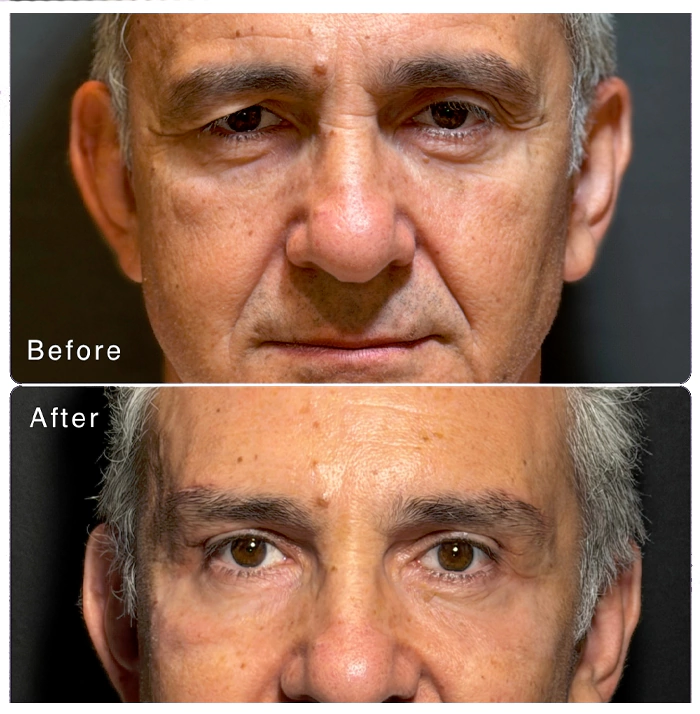
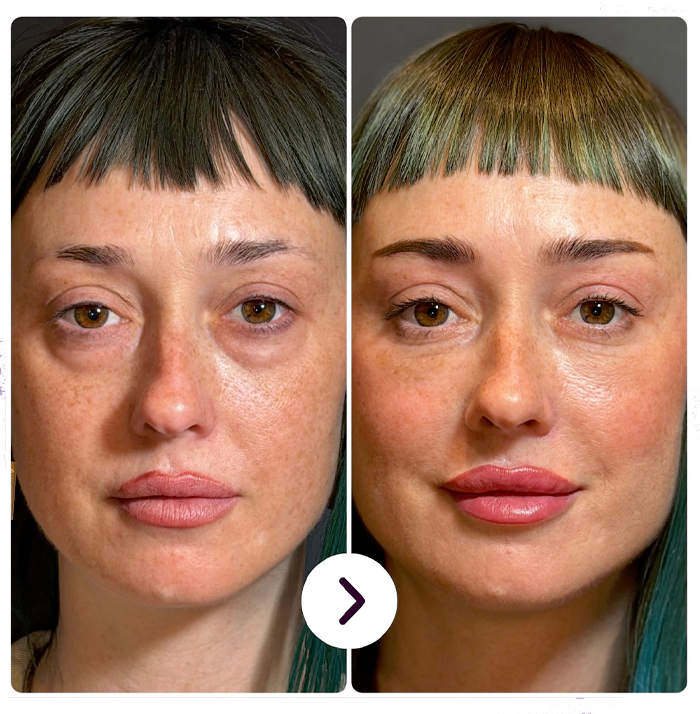
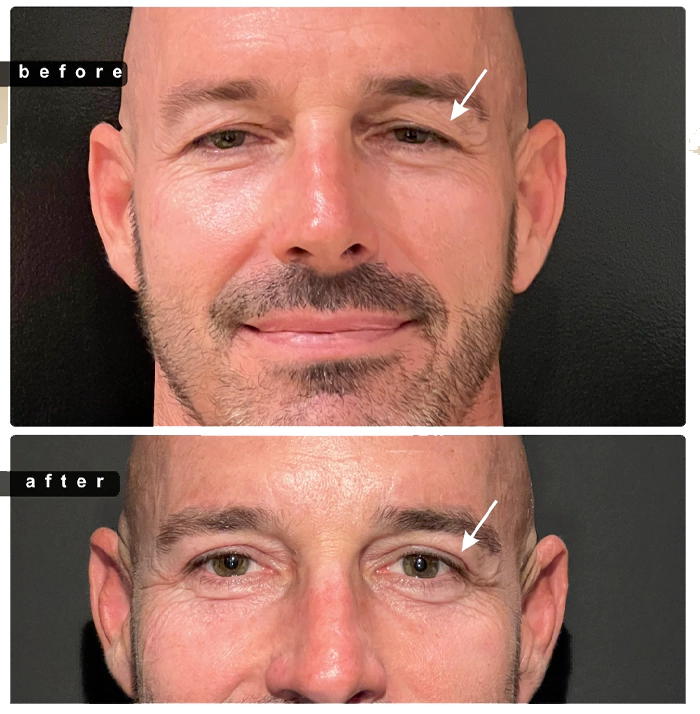
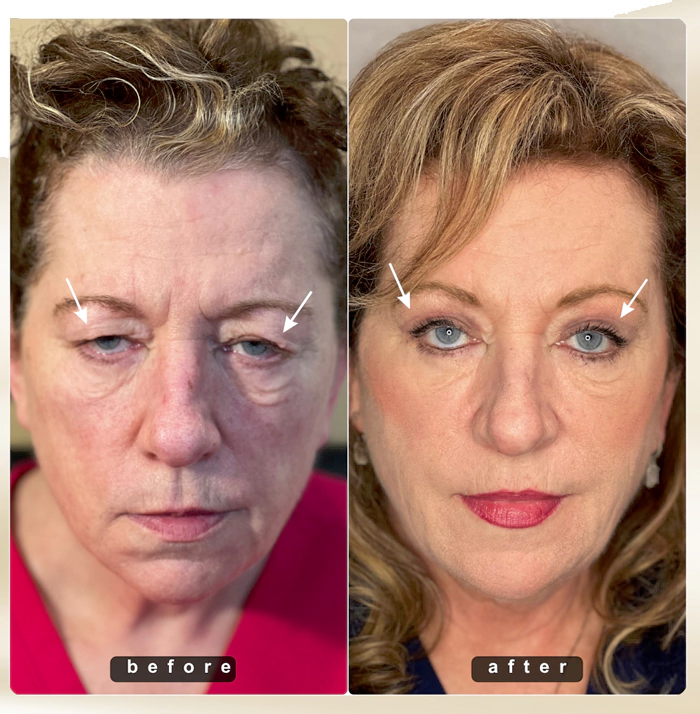
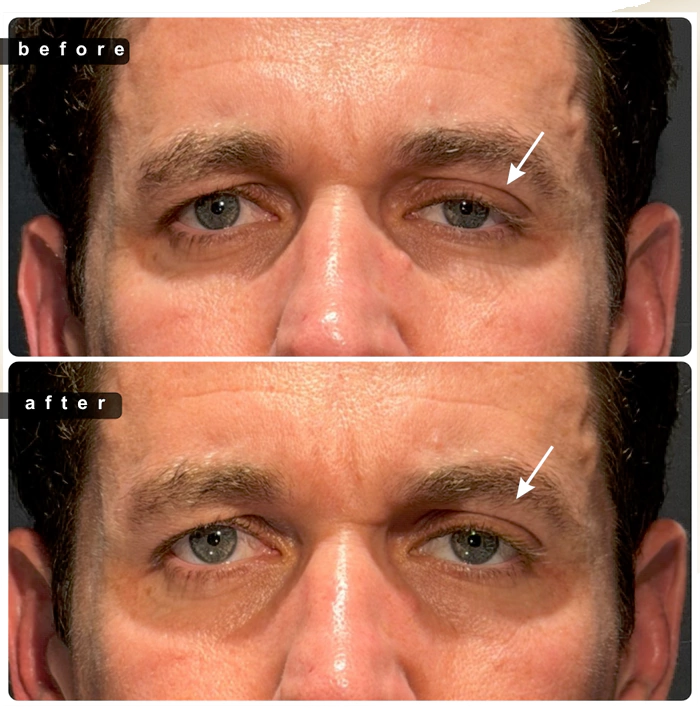
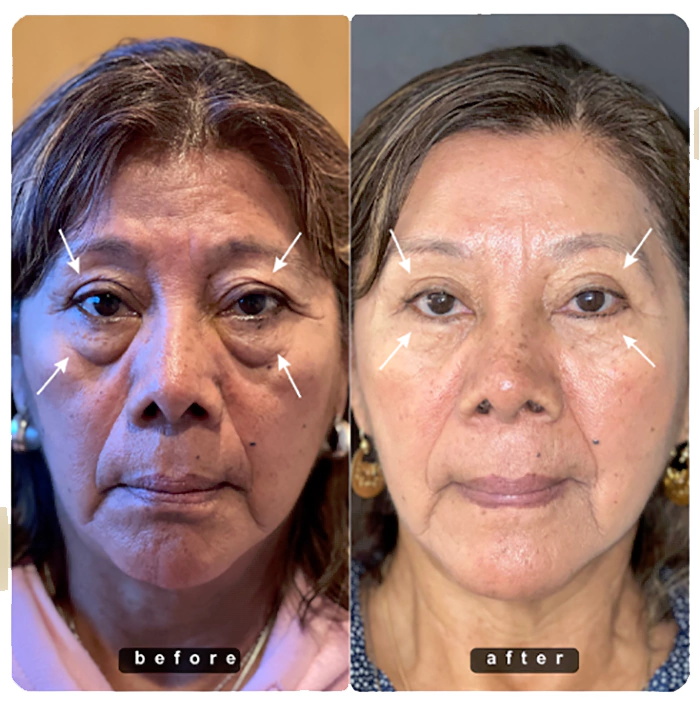
Blepharoplasty before and after
The before-and-after photos you see here showcase some of the results achieved by patients who underwent blepharoplasty with Dr. Adele.
Upper vs. Lower Blepharoplasty
Blepharoplasty can be performed on the upper eyelids, lower eyelids, or both, depending on the patient’s concerns and anatomy.
Upper Blepharoplasty
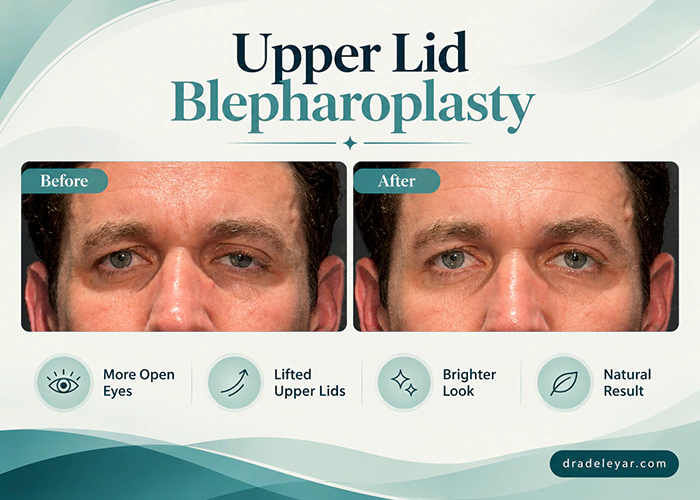
Upper eyelid surgery is performed through an incision placed in the natural eyelid crease. The surgeon removes only the amount of skin needed to reduce heaviness while preserving normal eyelid closure and function. Protruding fat may be adjusted conservatively, but excessive removal is avoided because it can create a hollow appearance.
Upper blepharoplasty may help patients with hooded skin, eyelid heaviness, uneven contours, makeup that disappears beneath a fold, or excess skin that partially blocks peripheral vision.
Lower Blepharoplasty
Lower eyelid surgery addresses under-eye bags, bulging fat, puffiness, and loose skin. Depending on the patient’s anatomy and needs, the incision may be placed just beneath the eyelashes or inside the lower eyelid, known as a transconjunctival approach. Fat is often preserved or repositioned rather than aggressively removed, helping create a smoother transition between the lower eyelid and cheek.
Who Is a Good Candidate for Blepharoplasty?
A good candidate for blepharoplasty is generally healthy, has realistic expectations, and is bothered by eyelid concerns that skincare or nonsurgical treatments cannot adequately improve. During the consultation, the surgeon evaluates the eyelids, brows, eye health, and overall facial balance to determine the safest and most effective treatment.
Suitable candidates for blepharoplasty may include:
- Healthy individuals with no uncontrolled medical conditions
- People bothered by excess upper eyelid skin or hooding
- Individuals with under-eye bags or lower eyelid puffiness
- Patients with eyelid heaviness that makes them look tired
- People whose excess upper eyelid skin affects peripheral vision
- Individuals with realistic expectations about the results
- Patients who do not smoke or are willing to stop smoking before and after surgery
- People with stable eye health and manageable dry eye symptoms
- Patients who understand that blepharoplasty does not correct every concern, such as dark circles, crow’s feet, or low eyebrows
- Individuals with eyelid drooping caused by ptosis who may need ptosis repair alone or in combination with blepharoplasty
- Patients who are willing to follow preoperative and postoperative instructions
- People who understand that the procedure improves the appearance of the eyelid area but does not stop the natural aging process
How Is Blepharoplasty Performed?
Blepharoplasty is planned around each patient’s anatomy. Before surgery, the natural eyelid crease is mapped, and the amount of skin to be treated is carefully marked. Removing too little may leave persistent heaviness, while removing too much can affect eyelid closure, comfort, and shape.
Many upper eyelid procedures can be performed in the office using local anesthesia. The eyelids are numbed, so patients should not feel sharp pain. They may notice light pressure, touch, or gentle movement. Through the hidden crease incision, excess skin is removed, and fat is preserved, repositioned, or conservatively refined when necessary. The incision is closed with very fine sutures.
An upper blepharoplasty often takes about one hour. Surgery may take longer when the lower eyelids or another procedure is included. Patients generally return home the same day.
Dr. Adeleh Yarmohammadi designs the procedure around your brow position, eyelid crease, fat distribution, tear film, and overall facial balance. Schedule an evaluation in Beverly Hills or Santa Monica to discuss the most natural approach for your eyes.
Is Blepharoplasty Painful?
Most patients are surprised by how comfortable eyelid surgery can be. With local anesthesia, significant pain during the procedure is not expected. After surgery, patients more often describe tightness, swelling, mild soreness, or pressure rather than significant pain.
Discomfort is usually manageable with cold compresses and surgeon-approved medication, such as acetaminophen when appropriate. Severe pain, sudden vision changes, rapidly increasing swelling, or significant bleeding is not typical and requires immediate medical attention.
The Modern Tissue-Preserving Approach
Older techniques often focused on removing skin, muscle, and fat. Although this could create a tighter appearance, aggressive tissue removal sometimes resulted in hollowing as the face continued to age.
Modern oculoplastic surgery follows a more restorative principle: less removal and greater preservation. Fat is repositioned or retained whenever possible to maintain natural volume and support. Skin removal is conservative, and the eyelids are evaluated as part of the entire upper face.
The goal is not to erase every sign of aging or make you look like someone else. It is to create a refreshed, elegant result that preserves your unique eye shape and continues to age naturally.
How to Prepare for Eyelid Surgery
Preparation begins with a detailed medical and eye history. Your surgeon will review medications, vitamins, and supplements that may increase bruising or bleeding. Never stop a prescription medication without approval from the prescribing physician and your surgeon.
Before surgery, arrange transportation home, have someone available to help you during the first 24 hours, prepare cold packs and prescribed medications, avoid nicotine as directed, and arrive with a clean face without makeup or contact lenses. Wear comfortable clothing that does not need to be pulled over your head.
Blepharoplasty Recovery Timeline
| Recovery Period | What to Expect |
| First 48 Hours | Swelling, bruising, tightness, and temporary blurry vision are common. Use cold compresses and keep your head elevated. |
| Days 3–7 | Bruising and swelling gradually improve. Mild tightness or itching may occur. Sutures are usually removed near the end of the first week. |
| Days 7–10 | Many patients can return to work and social activities. Mild discoloration may remain. |
| Weeks 2–6 | The eyelids continue to look more natural. Resume exercise, eye makeup, and contact lenses only with your surgeon’s approval. |
| Months 3–6 | Residual swelling continues to improve, the eyelid contour becomes more refined, and scars gradually soften. |
Restrictions After Blepharoplasty
Avoid the following after blepharoplasty:
- Do not rub your eyelids.
- Apply the prescribed ointment to protect the incision.
- Limit face washing until your sutures are removed, unless your surgeon provides different instructions.
- Clean the surrounding facial area gently.
- Wash your hair with your head tilted back to keep water and shampoo away from your eyes.
- Avoid eye makeup until your surgeon confirms that it is safe.
- Avoid strenuous exercise and heavy lifting for approximately two weeks or as directed.
- Avoid excessive bending during the early recovery period.
- Use sun protection to help prevent prolonged redness and scar darkening.
Risks and Possible Complications
Blepharoplasty is generally well tolerated, but every surgical procedure carries risks. Expected temporary effects include swelling, bruising, dryness, irritation, mild asymmetry, and temporary changes in sensation.
Less common complications include infection, bleeding, delayed healing, noticeable scarring, prolonged dry eye symptoms, difficulty closing the eyes, changes in eyelid position, or asymmetry that may require additional treatment. Rare but serious vision symptoms require urgent medical attention.
Risk reduction starts with accurate diagnosis, evaluation of eye health and the tear film, conservative tissue handling, and a personalized treatment plan. An oculoplastic surgeon evaluates both eyelid appearance and eye function.
Blepharoplasty by Dr. Adeleh Yarmohammadi
Dr. Adeleh Yarmohammadi is a board-certified ophthalmologist and oculoplastic surgeon in Beverly Hills and Santa Monica. She specializes in natural upper and lower blepharoplasty, ptosis repair, brow surgery, revision eyelid surgery, and facial rejuvenation.
Her approach combines microsurgical precision with an artist’s eye. She evaluates how the eyelids interact with the brows, cheeks, tear film, and overall facial proportions. The priority is a refreshed, balanced result that protects function and does not change the patient’s identity.
To learn whether upper blepharoplasty, lower blepharoplasty, ptosis repair, brow surgery, or a combined approach is right for you, schedule a personalized consultation with Dr. Adeleh Yarmohammadi Eyelid Surgeon in Beverly Hills or Santa Monica.

Frequently Asked Questions
Results are long-lasting, but surgery does not stop the aging process. Genetics, skin quality, sun exposure, and lifestyle can influence how the eyelids change over time.
A conservative, anatomy-based procedure should preserve your natural eye shape. The purpose is to reduce heaviness or smooth the contour, not to create an unfamiliar appearance.
Many patients can resume wearing eye makeup after the incisions have healed and the surgeon confirms that it is safe, often around two weeks after surgery.
One Response