
Lower blepharoplasty, also known as lower eyelid surgery, is a cosmetic procedure designed to improve puffiness, protruding fat, loose skin, and hollowness beneath the eyes. Rather than simply removing tissue, modern lower eyelid rejuvenation focuses on restoring smoother contours between the eyelid and cheek while maintaining a natural, balanced appearance.
Depending on your anatomy, lower blepharoplasty may involve removing a small amount of excess fat, repositioning existing fat into hollow areas, tightening loose skin, or combining several techniques. The most appropriate approach is selected after carefully evaluating the eyelids, tear trough, skin quality, facial structure, and overall eye health.
What Is Lower Blepharoplasty?
Lower blepharoplasty is surgery performed on the lower eyelids to reduce under-eye bags, improve excess or crepey skin, and create a smoother transition between the lower eyelid and cheek. It can address age-related changes as well as naturally prominent lower eyelid fat that may be present in younger adults.
A modern approach does not necessarily involve aggressive lower eyelid fat removal. In some patients, removing too much fat can create a hollow or operated appearance. Instead, preserving or repositioning fat may help restore volume in the tear trough and produce more natural results.
lower eyelid surgery before and after
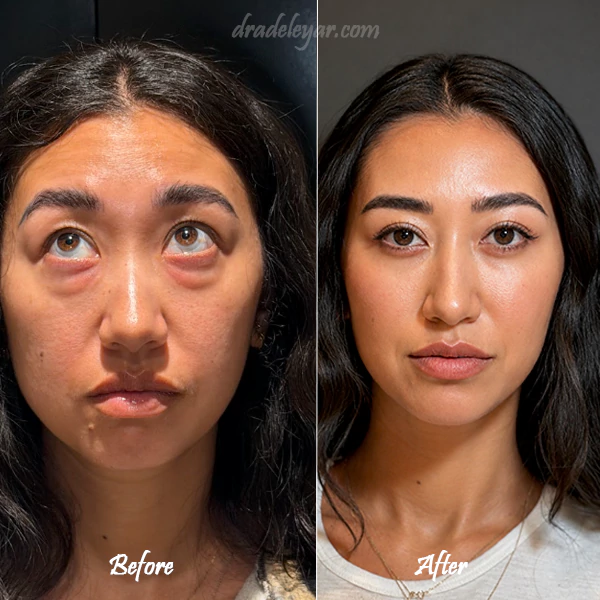
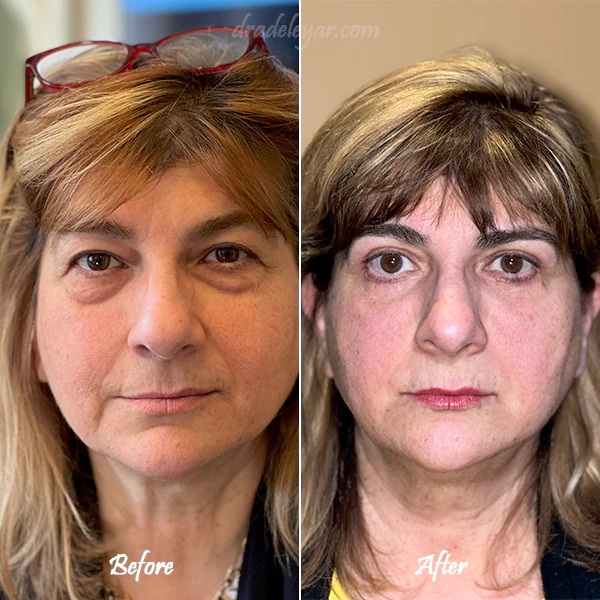
Considering under-eye bag surgery? Schedule a personalized consultation with Dr. Adele Yarmohammadi to have your lower eyelid anatomy, eye health, and aesthetic goals evaluated before choosing the most appropriate treatment.
Who Is a Good Candidate for Lower Eyelid Surgery?
Lower eyelid surgery may be appropriate for adults who are bothered by persistent under-eye bags or age-related changes that cannot be adequately improved with skincare or nonsurgical treatments. Good candidates generally have realistic expectations and are healthy enough to undergo elective surgery.
Concerns that may be improved with lower blepharoplasty include:
- Persistent under-eye bags or puffiness
- Bulging lower eyelid fat
- Loose or excess lower eyelid skin
- A visible tear trough or lid-cheek hollow
- Fine wrinkles around the lower eyelids
- An aged or chronically tired appearance
Patients with dry eye symptoms, eyelid laxity, previous eyelid surgery, thyroid-related eye disease, prominent eyes, or certain medical conditions require especially careful evaluation before surgery.

How Is Lower Blepharoplasty Performed?
There is no single lower blepharoplasty technique that is ideal for every patient. An experienced eyelid surgeon evaluates where the excess volume, hollowing, skin laxity, and structural changes are located before developing the surgical plan.
Transconjunctival Lower Blepharoplasty
In a transconjunctival lower blepharoplasty, the incision is made on the inside of the lower eyelid. Because there is no external skin incision, this technique is especially useful for patients with prominent fat pads but little or no excess skin.
The surgeon can access the lower eyelid fat through this incision and either conservatively reduce it or reposition it. When appropriate, skin resurfacing or a limited skin treatment may be combined with the procedure.
Transcutaneous or External Lower Eyelid Surgery
When noticeable skin excess or additional eyelid support must be addressed, an incision may be made just below the lower eyelashes. This approach allows the surgeon to treat skin, muscle, fat, and eyelid support structures when necessary.
Incisions are carefully positioned near the lash line so the resulting scar can become less noticeable as healing progresses.
Fat Repositioning Lower Blepharoplasty
Fat repositioning lower blepharoplasty is particularly useful when under-eye bags appear next to a deep tear trough. Instead of discarding all of the protruding fat, selected fat can be moved into the hollow below the eyelid.
This approach can simultaneously reduce puffiness and soften the lid-cheek junction. For certain patients considering tear trough surgery, fat repositioning may therefore create a smoother result than fat removal alone.
Lower Blepharoplasty vs. Tear Trough Filler
Lower blepharoplasty and dermal filler address different anatomical problems. Tear trough filler may be suitable for selected patients whose primary concern is hollowing rather than prominent fat bags, significant skin excess, or eyelid laxity.
Lower eyelid surgery provides structural correction and may be more appropriate when bulging fat or loose tissue is responsible for the concern. In other patients, nonsurgical eyelid rejuvenation options may be sufficient. A detailed evaluation can help determine whether surgery, filler, resurfacing, or another treatment is the most appropriate option.
Not sure whether you need lower blepharoplasty, tear trough treatment, or another eyelid rejuvenation option? Book a consultation with Dr. Adele for an individualized assessment rather than choosing a treatment based only on the appearance of under-eye bags.
How Long Is Recovery After Lower Eyelid Surgery?
Most patients experience temporary swelling and bruising after lower eyelid surgery, particularly during the first several days. These changes gradually improve, and many patients feel comfortable returning to work and social activities within approximately one to two weeks, although recovery varies from person to person.
Common postoperative recommendations may include:
- Using cold compresses during the early recovery period
- Keeping the head elevated while resting
- Using prescribed ointments or lubricating eye drops as directed
- Avoiding strenuous exercise during early healing
- Protecting the surgical area from excessive sun exposure
- Attending scheduled postoperative examinations
If external sutures are used, they are often removed during an early follow-up appointment. Residual swelling may continue to improve for several weeks, and the final contour becomes more apparent as the tissues fully settle.

When Will I See the Final Results?
Initial improvement can often be noticed once bruising and swelling begin to resolve, but the final outcome of lower blepharoplasty develops gradually. The lower eyelids may continue to refine for several months as residual swelling disappears and the tissues settle into their new position.
Well-planned surgery should make the eyes look smoother and more refreshed without dramatically changing facial identity. Achieving natural results depends on selecting the appropriate technique, preserving necessary volume, and avoiding excessive skin or fat removal.
What Are the Risks of Lower Blepharoplasty?
Lower blepharoplasty is performed close to delicate eye structures, making careful surgical planning and postoperative monitoring especially important. Temporary swelling, bruising, irritation, tearing, dryness, or tightness may occur during healing.
Less common but potentially important complications can include:
- Eyelid asymmetry
- Infection or bleeding
- Persistent dry eye symptoms
- Lower eyelid retraction
- Ectropion, or outward turning of the eyelid
- Overcorrection or undercorrection
- Visible scarring
- Temporary visual disturbances or, rarely, more serious vision problems
- Need for additional treatment or revision surgery
A detailed ophthalmic and eyelid examination before surgery helps identify factors that may increase these risks.
Lower Blepharoplasty with Dr. Adele
Because lower eyelid rejuvenation involves both cosmetic appearance and structures that protect the eye, the surgeon should understand eyelid anatomy, ocular health, eyelid position, tear function, and facial balance.
Dr. Adele Yarmohammadi is a board-certified ophthalmologist trained in California. She completed her ophthalmology residency at the UC San Diego Shiley Eye Institute, where her training included mentorship from leaders in oculoplastic surgery. Her background in ophthalmology and facial aesthetic procedures allows her to evaluate both the cosmetic goals of lower blepharoplasty and the health and function of the eyes and eyelids.
Successful under-eye bag surgery is not simply about removing as much fat or skin as possible. The goal is to identify the anatomical cause of the concern and select a technique that creates a smooth, rested appearance while maintaining healthy eyelid function.
If you are considering lower blepharoplasty, fat repositioning, tear trough surgery, or other eyelid rejuvenation options, schedule a consultation with Dr. Adele Yarmohammadi. A personalized evaluation can determine which treatment is most appropriate for your anatomy and help you understand the expected recovery, benefits, limitations, and potential risks before making your decision.
Frequently Asked Questions About Lower Blepharoplasty
Lower blepharoplasty is a surgical procedure that rejuvenates the area beneath the eyes by treating problems such as under-eye bags, protruding fat, loose skin, and tear trough hollowing. Depending on the patient, surgery may involve fat removal, fat repositioning, skin tightening, or a combination of techniques.
Many patients can return to work and social activities within approximately 7 to 14 days, depending on swelling, bruising, and the type of procedure performed. Complete healing and refinement of the final result can take several months.
It depends on the cause of the discoloration. Lower blepharoplasty may improve shadows caused by prominent bags or a deep tear trough, but it does not necessarily eliminate pigmentation, visible blood vessels, or every cause of dark circles.
Results are generally long-lasting because surgically corrected fat and tissue do not immediately return to their previous position. However, lower eyelid surgery does not stop the natural aging process, and the skin and surrounding facial tissues will continue to change over time.
2 Responses